
The architect’s worst professional habit is falling in love with their own idea. I learned to let go of that in a train station project that kept falling apart.
There’s a version of architectural practice where the design is the answer, and everything that follows is defending it. Client pushback, engineering constraints, budget pressure, regulatory review; all of it becomes a threat to be managed rather than information to be integrated.
It’s an exhausting way to work. And on complex infrastructure projects, it’s a guarantee of failure.
I encountered the problem clearly while working on a series of train station upgrades for a state transport authority in Australia. The standard model – commission a design, develop it through stages, coordinate stakeholders as they appear – worked reasonably well for new lines with new stations. It collapsed on transformation projects, where the number of stakeholders, the layered constraints, and the political exposure made every design decision a potential flashpoint.
The architect kept losing ground. The project kept stalling. The public kept complaining.
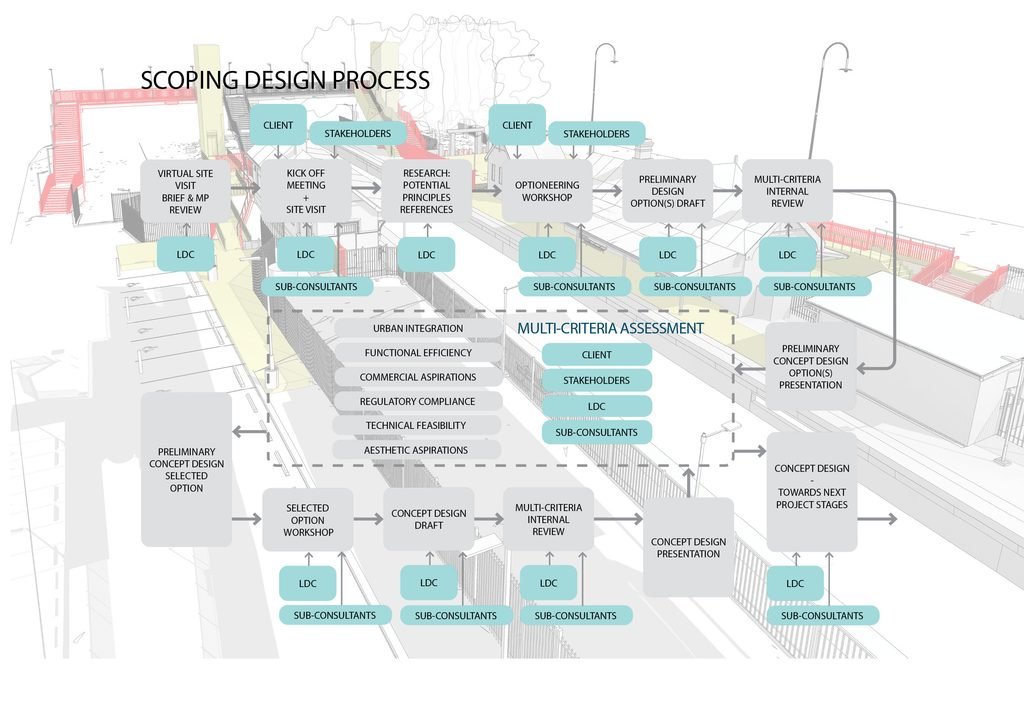
The response we developed with a major Australian engineering firm was a Scoping Design process built around multi-stakeholder assessment sessions, structured exploration of every viable option before committing to any of them. Technical, economic, experiential, operational. Including the options that seemed absurd.
That last part matters more than it sounds. In public infrastructure, an untested idea, however implausible, can derail a project if it hasn’t been visibly considered and documented. The process had to be exhaustive precisely because the audience wasn’t just engineers and planners. It included community representatives, accessibility advocates, operations teams, and elected officials. The final result was submitted to public consultation with a robust evidentiary base that made it genuinely difficult to challenge.
The architect’s role in that process wasn’t author. It was conductor, directing an ensemble of very different instruments toward a result that none of them could have reached independently.
What I took from it applies well beyond infrastructure: the most defensible design is rarely the most inspired one. It’s the one that has honestly confronted every alternative and can demonstrate why it’s the better answer.
Falling in love with an idea, even a brilliant one, is a liability. Falling in love with the process of finding the right one is what produces architecture that lasts.
#DesignLeadership #Architecture #Infrastructure
Deja un comentario